Showing posts with label roasting. Show all posts

Monday, March 29, 2010

Mushroom Pork Chops

Several weeks ago, I bought a family pack of pork chops. I divvied them up and froze what I didn't immediately use. Some of the chops were HUGE - like twice the size of a normal pork chop. Easily six inches or more long.

This last weekend I decided to make pork. Of course, I pull out the packaging, thinking it was a roast that I wanted to smother in mushrooms. Oops! I decided I would smother them in mushrooms anyway.

Mushroom-smothered Pork Chops
1 375ml bottle of rose wine
2 cinnamon sticks, broken into small pieces
1/2 teaspoon bruised grains of paradise (if you don't have them, use 1/4 teaspoon cracked black pepper)
3 very, very large pork chops
1 lb mushrooms, sliced thinly
2 teaspoons or so oil (I used my Chardonnay Fumé grapeseed oil.)
1 tablespoon or so sea salt

Marinade pork in wine, cinnamon, and grains of paradise for two hours.

Preheat oven to 325°F (163°C).

Spread some oil on the bottom of the roasting pan. Lay first pork chop in pan. Sprinkle with salt. Spread a little oil on pork chop. Cover with a layer of mushrooms.

Place second pork chop, salt, oil, and cover with mushrooms.

Place third pork chop, salt, and oil. Cover top and sides with remaining mushrooms.

Roast for 2 to 2-1/2 hours.


The mushrooms keep the pork very moist and add tons of flavor. The long, slow roast gelatinizes the connective tissue, giving a really, really rich, unctuous savor to the meat.

This dish is really easy to make but tastes like you had to really work for it. But let's keep how easy it is to ourselves.

Monday, November 23, 2009

Squash!

Fall brings with it squash. I love squash -- it's sweet and savory at the same time. And so much fun to cook! You can roast it, blanch it, fry it, etc.

It's also forgiving. You can add any spices you want to it and it generally turns out pretty good.

When roasting squash, you can roast it on its own, or take a little more time and stuff it. I prefer stuffing it. Some of my favorite stuffings include chicken/rice, wild rice/brown rice/wheat berries, and black beans/rice. Tonight's dinner was acorn squash stuffed with black beans and rice.

Acorn Squash Stuffed with Black Beans and Rice
1 large acorn squash
2 15oz. cans black beans
1 cup brown basmati rice
1/2 tablespoon coriander seeds
1 teaspoon ground cumin (or 1/2 tablespoon cumin seeds)
1 teaspoon tumeric
2 teaspoons salt
2 tablespoons butter
1/4 cup minced onion
3 cloves garlic, minced
2 cups water

Preheat oven to 400°F (205°C).

Put rice, water, and 1/2 teaspoon salt in saucepan and bring to a boil. Once boiling, turn to a simmer and simmer until done.

Cut squash into halves. Scoop out seeds and discard. Poke surface several times with a fork.

Melt half the butter. Baste the cut surface and cavity of the acorn squash. Sprinkle 1/4 teaspoon of the salt on each half. Place halves cut side up in roasting pan and place in oven.

Heat skillet and toast whole spices (do not use butter). Once the spices become aromatic, remove from skillet and grind in mortar and pestle. Melt butter in same skillet and saute onions and garlic until onion has turned translucent.

Once the rice is done, add beans (including fluids in can), onions, garlic, and spices. Continue heating until beans are heated through. The rice and beans should still be a bit soupy so the rice doesn't overly dry out in the oven.

Pull squash out of oven and fill cavities with beans and rice mixture. Return to oven (cut side up) and continue roasting until squash is done (soft through).


The savoriness of the beans highlights the sweetness of the squash. This is a satisfying meal without meat, which is nice with Thanksgiving coming up this week.

Monday, September 28, 2009

Duck, Duck, Nom

I love cooking game meats. I grew up in a hunting family where what we brought in was a significant portion of the meat we ate: venison, goose, squirrel, rabbit, grouse, and duck. Now that I no longer live with my parents and no longer hunt (due to living in a city and not tolerating cold at all), I don't get game nearly as often. But, if I'm willing to pay a bit of cash, I can often get farm-raised game in a local grocery.

This week, I had offered to provide a meat entreé for a dinner party hosted by a friend. I wanted to make a special dish that people would remember and that they couldn't get very often, so I chose to roast a duck with rosemary and nectarines.

Duck with Rosemary and Nectarine
1 2-3 pound ducking, skin on (if the duck comes skinless, lay strips of bacon along the breast to keep it from drying out)
1 nectarine
2-3 stalks rosemary
1/2 - 1 teaspoon salt
2 tablespoons butter, melted

Preheat oven to 350°F (175°C).

Chop the rosemary finely.
WARNING: Do not chop fingers while chopping rosemary. If finger is chopped while chopping rosemary, seek medical attention if necessary. Once finger is appropriately treated and bandaged, discard rosemary and start with fresh rosemary, knife, and cutting board. Or avoid potential of above by using food processor ;)


Peel nectarine and remove pit. Slice or chop nectarine into large pieces.

Unwrap duck and remove any giblets, neck, or other material remaining in body cavity. Rinse out with cold water and drain briefly.

Spread salt throughout the cavity of the duck and rub gently. Insert rosemary and nectarine into cavity.

Spread a little of the butter in a roasting dish and place bird in dish. Rub remaining butter on the skin of the bird (if bird is skinless, skip this and lay bacon on bird instead).

Place duck in oven and cook until internal temperature has reached 170°F (77°C). Remove duck (remove bacon now) and let rest.


The duck can be served hot or cold.

I served the duck cold as I made it the day before the party. The duck remained moist and flavorful, perfumed with the rosemary. The gaminess of the duck was offset by the nectarine, though apricots, apples, or peaches will work as well.

The duck meat was very, very moist and tender. In fact, the carving the duck was an adventure as it wanted to fall away from the bone.

Monday, February 9, 2009

Roasted Chicken and Roasted Vegetable Soup

Well, after I roasted the chicken (see previous post), I had a wonderful idea: roasted chicken and vegetable soup. I didn't want to waste any of the deliciousness that was the chicken.

I took the carcass from the chicken I roasted, pulled off any remaining large chunks meat, then boiled the carcass. I also scraped all the jelly off the serving platter (that's where a lot of the gelatin pools) and added it to the broth . I then roasted up some veggies for the soup.


Roasted Chicken and Vegetable Soup

1 5 lb chicken carcass
4 cups of noodles (thick, dumpling-like noodles work best)
3/4 inch piece of fresh ginger
1/2 pound of carrots
1 large turnip
1 medium onion
3/4 pound of mushrooms (preferably crimini)
1/2 cup of extra-virgin olive oil
3 bay leaves
3 tablespoons of chopped garlic
1 tablespoon of sesame seeds
1/2 tablespoon of ground cumin
freshly ground black pepper to taste
1 tablespoon of balsamic vinegar
Water

Preheat oven to 450°F (232°C).

While roasting the chicken, put the giblets and neck in a pan to boil. This can be done ahead of time. Once the chicken is roasted, remove the large cuts of meat from the carcass. Reserve some of the roasted meat for soup; use or freeze the remainder.

Put the carcass and skin in the pan with the giblets and neck and simmer. As the carcass simmers, regularly scum away the froth and fat that collects on the top of the broth.

Chop carrots, turnip, onion, and mushrooms into bite-size pieces. Drizzle olive oil and 1/2 teaspoon of salt over the vegetables and mix until all of the vegetables are coated. Coat a baking sheet with sides with olive oil (a sheet of aluminum foil can be placed in the bottom of the sheet and oiled for easier cleaning). Put vegetables in the sheet. Roast until nearly done, about 1/2 hour or so.

Once the stock has simmered for a few hours, strain the chicken carcass out of the stock. Remove useful meat from the carcass and return to the broth. Add the vegetables and vinegar.

Simmer for an hour. Continue scumming any froth or floating fat. Add noodles and cook until noodles are done. Enjoy!
This soup can be made with roasted potatoes in addition to or instead of the noodles. I don't like my soups too starchy, so I only use one starch. When I make chicken soup, I prefer noodles. When we moved to Spokane, I discovered Country Pasta, a brand of noodles that are much, much thicker than standard egg noodles, at Costco. I love the texture they bring, dense and chewy, almost dumpling-like.

The soup turned out really, really well. The balsamic vinegar really highlighted the roasted flavors of the chicken and vegetables without making the soup sour or tangy. I roasted the vegetables until they were done and they were good, but I think taking them out of the oven while they are still al dente will make the soup a little more flavorful without making the veggies mushy.

Monday, February 2, 2009

One-oven Meals

As I stated a few weeks ago, I love to roast! I will roast beef, chicken, lamb, pork, potatoes, vegetables, apples -- just about anything. The weather recently turned colder (our lows are about to go below zero again!), so I wanted to heat up the downstairs without using too much electricity. Using the oven allowed me to make dinner and heat up the house.

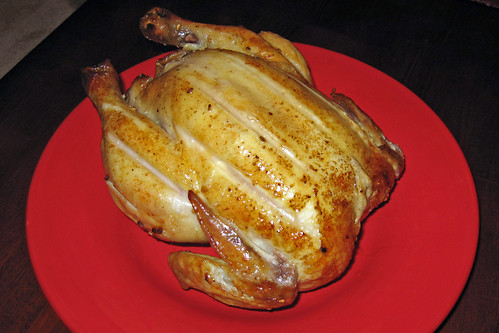
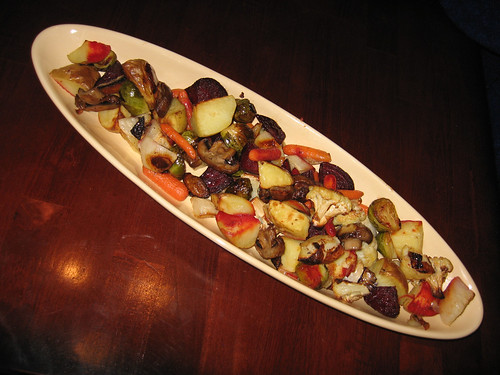
Dinner was roasted chicken stuffed with aromatics and roasted veggies. The house smells amazing.

Roasted Chicken
5 lb chicken, whole
1/2 medium onion
3-4 tablespoons chopped garlic
1-inch piece of fresh ginger
1 teaspoon cumin seeds, whole
2 teaspoons sesame seeds, whole
1/2 teaspoon black peppercorns, whole
1-2 teaspoons kosher salt
2-3 teaspoons olive oil

Preheat oven to 450°F (232°C).

Chop the onion into large pieces, approximately 1-inch pieces. Slice the ginger into thick slices. Toast the cumin and sesame seeds in a small skillet on low heat until the seeds turn brown. Mix the aromatics together.

Clean the neck and giblets, large gobs of fat, and extra viscera out of the cavity of the chicken. Oil the chicken skin with a little olive oil. Stuff the chicken with the aromatics. Place chicken breast down on a roasting rack in a roasting pan (or cookie sheet with sides). Roast until the chicken reaches 180°F (82°C) -- about 15 minutes to the pound. Test the doneness of the chicken by temp, not time or "jiggle test." Rest the chicken at least 15 minutes.

If the chicken breast does not get brown enough, turn the chicken over once it reaches 150
°F (65°C) and finish roasting. I often don't turn the chicken if there is a lot of air circulation around the bird.
2009 01 24 roast chicken

Roasted Vegetables
1/4 to 1/2 pound carrots (baby carrots preferred)
4 large crimini mushrooms
1 med to large turnip
1 med to large beet
8 brussel sprouts
1/2 med onion
1/4 head of cauliflower
2 med to large potatoes (I prefer white potatoes, though russets and yukon golds will work as well)
1/4 to 1/2 cup olive oil
1 teaspoon kosher salt

Wash the vegetables well. Peel the onion, beet, and turnip; I like the potatoes with the skin. Chop all the vegetables into bite-size pieces.

Oil a cookie sheet with sides. Drizzle the vegetables with oil and sprinkle the salt on them. Toss the veggies in the oil until all the vegetables are coated (if you cut smaller pieces than I did, you might need more oil). Spread out on cookie sheet into single layer. The beets will bleed onto other vegetables. If this is an issue, roast the beets on a separate cookie sheet.

Roast at 450°F (232°C) for 30-45 minutes until the vegetables are tender. Add pepper, garlic, or other herbs to taste.
2009 01 24 roast veggies


Yes, the house got wonderfully warm and yummy-smelling. I enjoyed the cooking/smelling process as much as the eating process.

To cook everything in a single oven, you need to put the bottom rack nearly to the lowest setting and the top rack almost to the top. The more space between the racks, the more air circulation you have. In addition, try to make sure the top disk is smaller than the bottom dish. Again, this will help with air circulation so your chicken will roast and not steam.

The chicken was amazingly tender and juicy. By roasting it breast down, the chicken was self-basting and the breast never got a chance to dry out. In addition, the dark meat was juicy, but not greasy. Unfortunately, the breast didn't brown the way I wanted -- I should have oiled the breast and turned the chicken over. That would also have prevented the chicken from sticking to the roasting rack (not too much of a problem).

The veggies, on the other hand, were pretty spot-on. Wonderful Maillard reactions and caramelized vegetable sugars. The cauliflower and the brussel sprouts did incredibly well -- they got sweeter and less cabbage-y.
The potatoes and turnips were sweet and creamy.

And, in the interest of getting the most out of everything, I get to make chicken stock from the carcass!